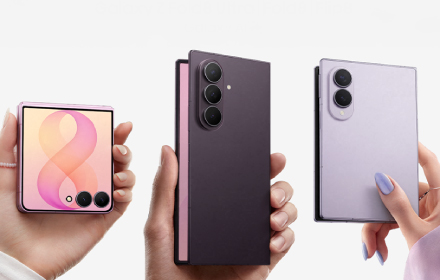
[Invitation] Galaxy Unpacked February 2026: The New AI Phone to Make Your Life Easier
Samsung Electronics unveils its new Galaxy S series at "Galaxy Unpacked 2026," to be hosted in San Francisco, USA. Showcasing Samsung’s newest Galaxy innovations to make every-day life even more convenient and efficient, the event will be streamed live on Samsung.com, Samsung Newsroom and the Samsung YouTube channel on February 26, from 10 a.m. PT, 1 p.m. EST, 6 p.m. GMT and 7 p.m. CET. Be the first to see the latest next-generation mobile device to join the Galaxy ecosystem at the Galaxy Unpacked 2026 live event.
Learn more |
|
|
|
Navigating the Samsung Pay SDK Development Lifecycle: Best Practices and Troubleshooting for Seamless IntegrationTo ensure seamless Samsung Pay integration, partners should follow established best practices, including understanding the full development lifecycle, proactively addressing potential challenges, and adhering to guidelines for partnership setup, development, testing, and release. This tutorial provides a practical guide to these practices and troubleshooting strategies for integrating the Samsung Pay SDK. Learn how to effectively manage each critical step, including the testing process, and how to set your product up for success.
Learn more |
|
|
|
How Galaxy Watch's EDA Sensor Enhances Your Health Monitoring
The Electrodermal Activity (EDA) sensor introduced in Galaxy Watch8 monitors and precisely analyzes physiological responses to provide detailed insights into users’ stress levels and sleep patterns. With the Samsung Health Sensor SDK, developers can now directly utilize raw EDA data to create an innovative healthcare solution that helps improve sleep quality and more. Learn more about EDA data, whose potential to advance the future of digital health was demonstrated at the World Sleep Congress 2025, on our blog.
Learn more |
|
|
|
Samsung Achieves Another Industry-First Virtualized RAN Milestone, Accelerating AI-Native, 6G-Ready Networks
Samsung Electronics has successfully completed the industry’s first commercial call on a Tier 1 U.S. operator’s live network, using its vRAN solution powered by the Intel Xeon 6700P-B processor, supporting up to 72 cores. This achievement represents more than simple connectivity. It marks a technological breakthrough in which complex network workloads, including the mobile core, radio access, transport, and security functions that were previously physically separated, were fully integrated and processed within a single-server environment. From significantly reducing power consumption and total cost of ownership (TCO) to building AI-native infrastructure, Samsung’s vRAN creates an optimized platform for the 6G era. Learn more about this innovation in our Newsroom.
Learn more |
|
|
|
A Reinforcement Learning-Based Rate Control for Neural Video Compression
Over the past few years, we have witnessed the explosive growth of end-to-end neural video compression (NVC) approaches, which surpass traditional standards by leveraging the powerful nonlinear modeling capability of deep neural networks (DNNs) and the advantages of optimization with large-scale training data. However, research on rate control, which is an essential component for the successful deployment of video codecs in real-world applications, remains limited.
In this study, we redefine NVC rate control as a Sequential Decision-Making Process, alleviating the limitations of temporal stationarity and achieving joint optimization without needing an additional two-step approach. We have further developed a dedicated Actor-Critic reinforcement learning framework that incorporates spatial-temporal state modeling and a joint quality-accuracy reward function. Our experimental results show a 19.7% reduction in encoding time. This study shows the potential of NVC applications and their feasibility by achieving breakthrough compression efficiency. Learn more about it on the Samsung Research blog.
Learn more |
|
|
|
Enhancing Noise Resilience in Face Clustering using a Sparse Differential Transformer
The method used to measure relationships between face embeddings plays a critical role in determining face clustering performance. Existing methods employ the Jaccard similarity coefficient instead of cosine distance to improve measurement accuracy. However, these methods tend to include too many irrelevant nodes that lower discriminative power, which ultimately affects clustering performance.
To address this problem, Samsung Research proposes a prediction-based Top-K Jaccard similarity coefficient that improves measurement reliability by enhancing the purity of neighboring nodes. We have developed a Sparse Differential Transformer (SDT) model with an enhanced anti-noise capability to resolve the noise issue introduced by the conventional vanilla transformer adopted in the optimal Top-K prediction process. The face similarity captured as its result is assessed to be more accurate than FC-ESER. SDT has proven to be a robust solution by achieving state-of-the-art performance across multiple datasets, including MS-Celeb-1M. Learn more about the SDT on the Samsung Research blog.
Learn more |
|
|
|
|
|
|
|
https://developer.samsung.com
Copyright© %%xtyear%% SAMSUNG All Rights Reserved.
This email was sent to %%emailaddr%% by Samsung Electronics Co.,Ltd.
You are receiving this email because you have subscribed to the Samsung Developer Newsletter through the website.
Samsung Electronics · 129 Samsung-ro · Yeongtong-gu · Suwon-si, Gyeonggi-do 16677 · South Korea
Privacy Policy
Unsubscribe
|
|
|
|
|
|
|
|
|