Style Your Emulator: Skins for Galaxy Z Series Now Available
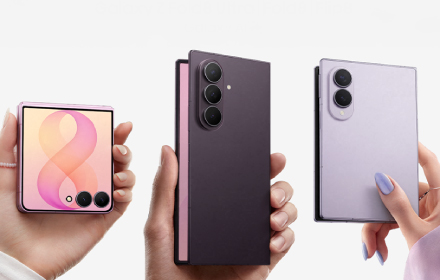
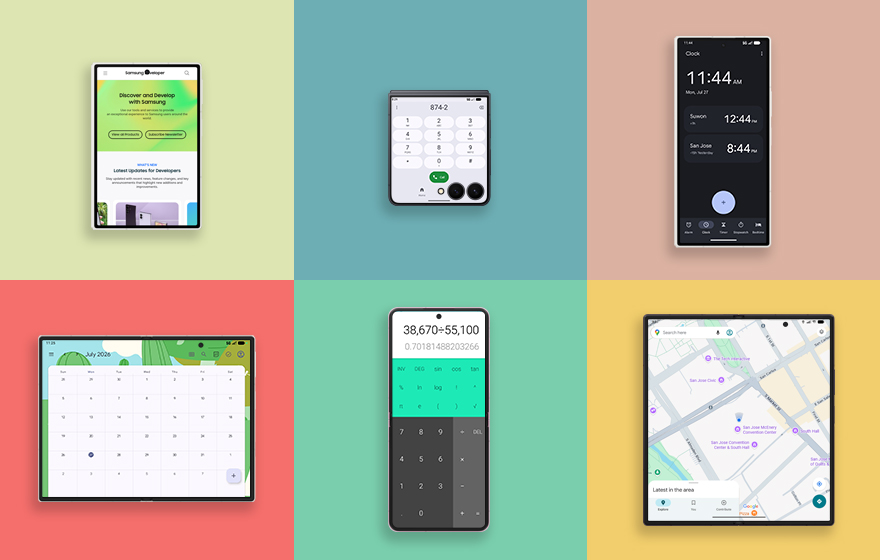
Download the all-new emulator skins for the Galaxy Z Flip8, Z Fold8, and Z Fold8 Ultra to unlock new experiences. Designed to recreate the appearance of these new Galaxy devices in the Android Studio emulator, these skins replicate the exterior details of the corresponding Galaxy devices like bezels, camera cutouts, and buttons.
These skins wrap around the entire emulator window, showcasing the distinctive design of each Galaxy device. You can think of them as your emulator's OOTD: download the Galaxy Z series emulator skins now and give your development environment a fresh new look.
Learn more |
|
|
|
Google ADV Rollout Starts on September 30Google's new Android Developer Verification (ADV) policy takes effect on September 30, 2026, in Brazil, Indonesia, Singapore, and Thailand. Sellers who have not completed ADV registration may have their applications blocked at the OS level, hidden from Galaxy Store, and become unavailable to re-download or update in these countries.
Seller Portal now shows each binary's ADV status. Starting in September, application submissions that include unapproved binaries will be blocked. Register your signing key now using Google's Android Developer Console to avoid service disruption. See the full notice on Seller Portal for detailed step-by-step instructions.
Learn more |
|
|
|
Samsung Health Webinar: Migrate to the Latest Samsung Health Data SDK
Join our upcoming webinar, "Migrate to the latest Samsung Health Data SDK," designed for partners using the Samsung Health SDK for Android. Learn why now is the right time to make the transition to the new version, and discover the benefits of migrating, including two-way health data exchange, simplified integration, and access to a wide range of SaMD data types. You can also find out how to use the migration guide and resources available on the Samsung Developer Portal. Register now to save your spot and get your questions answered live. Existing SDK partners will receive an invitation by email.
Date and Time: Wednesday, September 16, 11 AM (PT)
Register here |
|
|
|
Integrate RevenueCat with Samsung IAP for Galaxy Store
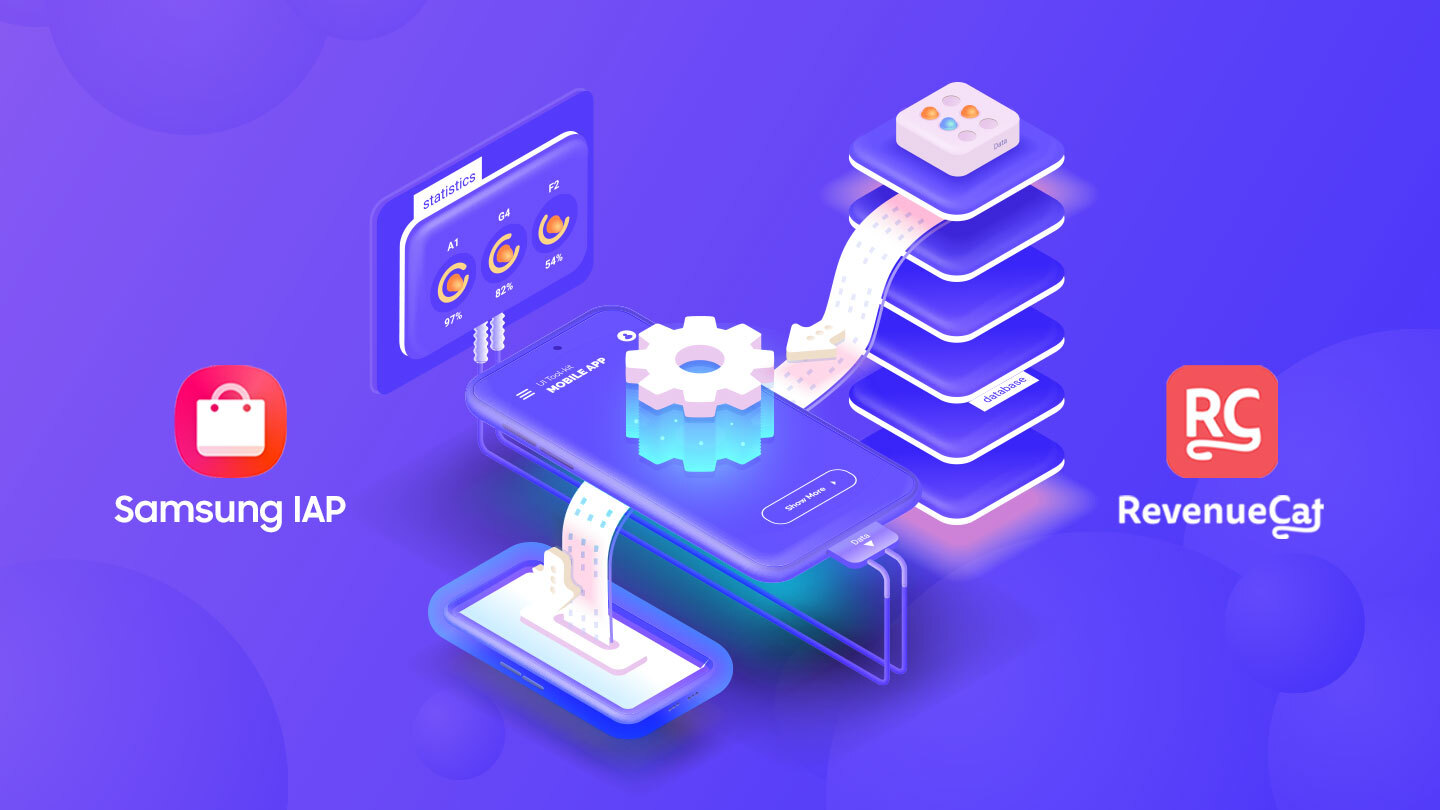
Managing subscriptions and purchases across multiple stores is key to any monetization strategy. If your application already uses RevenueCat with Google Play Billing, you can extend this integration to Samsung IAP for Galaxy Store with minimal added configuration. Our latest blog article walks you through the steps needed for the integration, from configuring product flavors to adding the RevenueCat Galaxy Store SDK, creating IAP products in the Seller Portal, and mapping entitlements.
This tutorial is a great starting point for participating in Shipaton 2026, which is RevenueCat's global hackathon running through September 30. Developers who launch a new application on Galaxy Store have a chance to win prizes.
Learn more |
|
|
|
How to Manage Buyer Comments in Galaxy Store Using the Developer API
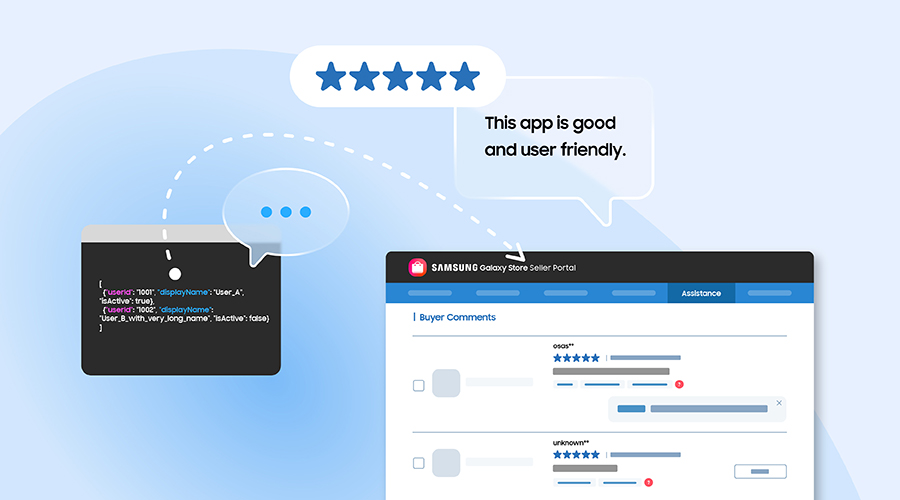
Managing user feedback is an important part of maintaining and improving any published application. The Galaxy Store Developer API allows you to retrieve buyer comments, respond directly to users, and manage replies without manually accessing the Galaxy Store Seller Portal. You can view user feedback, suggestions, and ratings, and use this information to identify issues, address user concerns, and implement new features. This tutorial walks you through the steps of implementing three APIs for efficiently managing buyer feedback, from retrieving comments using pagination and specific comments to adding and deleting replies. Learn more on the blog article about the Galaxy Store Developer API and how it can streamline customer support operations and enable more seamless communication with users.
Learn more |
|
|
|
Samsung Health Topics in Code Lab: Measuring, Analyzing, and Processing Health Data
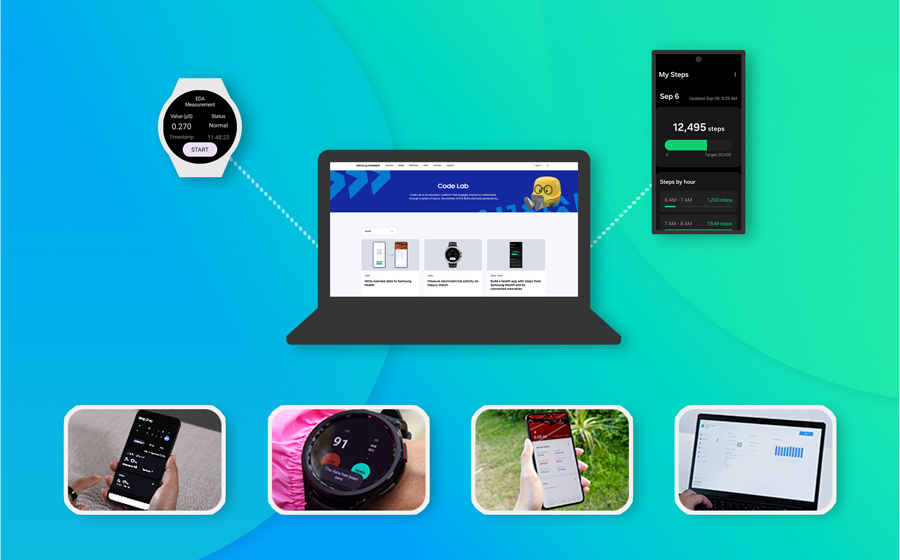
Samsung Health captures a wide range of biometric data, from electrodermal activity and skin temperature to blood oxygen levels, sleep stages, and continuous heart rate. Our Code Lab offers topic-based courses that provide step-by-step guidance on all key features of the Samsung Health platform for developers looking to build healthcare applications using the platform. The topics covered include measuring body metrics with various clinical sensors, analyzing clinical data obtained from research and monitoring sources, tracking fitness and activity data, and how to process health data by accessing, transferring, and logging data in Samsung Health.
To help developers make the best use of these capabilities, the Samsung Health topic-based courses in Code Lab provide hands-on, step-by-step instructions with sample code. Developers can learn how to read sensor values, process health metrics, and log workout data back in Samsung Health. Whether you’re building a fitness application, a sleep analysis tool, or a clinical research application, these topic-based courses provide a practical starting point for developers. Watch our short video for a quick overview, then visit Code Lab to explore all Samsung Health courses.
Watch the video
Explore Samsung Health in Code Lab |
|
|
|
LittleBit-2: Maximizing the Spectral Energy Gain in Sub-1-Bit LLMs via Latent Geometry Alignment
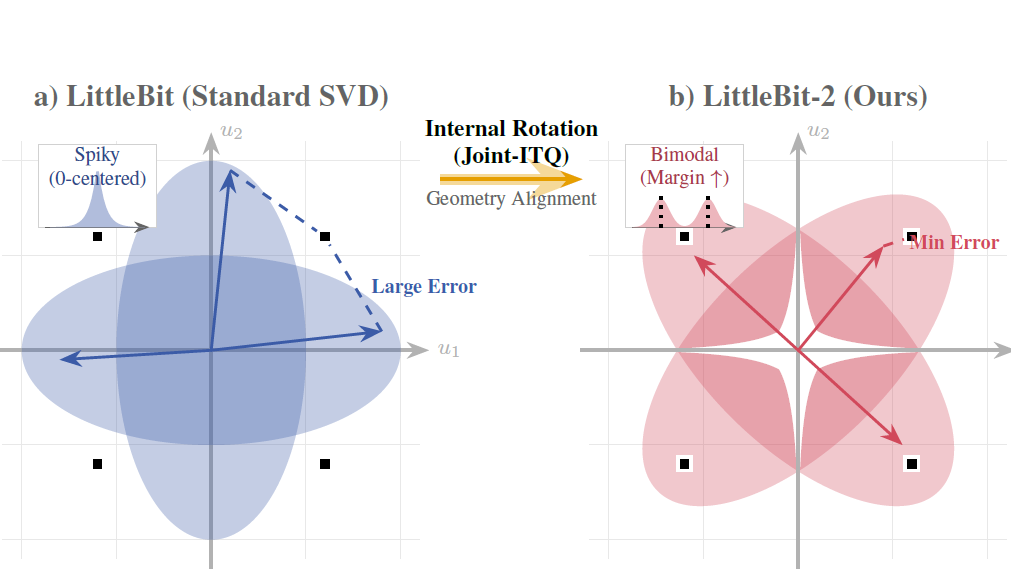
Large Language Models (LLMs) continue to deliver remarkable capabilities, but their memory footprint remains a major barrier to deployment. A 70B model requires roughly 140 GB of VRAM in FP16, and even a fully 1-bit version still demands around 15 GB, making deployment difficult on many edge and consumer-grade devices. LittleBit, Samsung Research’s previously introduced method, achieved compression down to 0.1 bits per parameter (bpp) through a Low-Rank Binary architecture, but despite its theoretical potential, it still trailed the best-performing baseline at the 1-bit operating point.
To address this, Samsung Research presents LittleBit-2, which tackles the issue of "Latent Geometry Misalignment." Building on the fact that factorization is rotation-invariant, LittleBit-2 uses Internal Latent Rotation and Joint-ITQ to align latent factors with the vertices of the binary hypercube, transforming them into a bimodal distribution that maximizes the decision margin. Presented at ICML 2026, the research achieved a perplexity of 11.53 and zero-shot accuracy of 57.33% on Llama-3 8B at 1.0 bpp, outperforming existing 1-bit baselines. Learn more on the Samsung Research blog about LittleBit-2, which shows new state-of-the-art results across the entire sub-1-bit regime, from 1.0 to 0.1 bpp.
Learn more |
|
|
|
Large-Scale AI CSI Compression for 6G FR3
In modern mobile systems, Channel State Information (CSI) feedback from user equipment (UE) plays a crucial role in enabling downlink operations, including beamforming, precoding, and scheduling. In particular, in the upper mid-band, or Frequency Range 3 (FR3), for upcoming 6G, extreme Multiple-Input Multiple-Output (X-MIMO) arrays with hundreds of antenna ports, such as 256-port configurations, make CSI feedback a major bottleneck. Conventional codebook-based feedback is difficult to scale to 256-port wideband channels without sacrificing accuracy, while AI autoencoders can become unstable under extreme compression and must also meet the requirement of keeping the UE-side encoder extremely lightweight.
To address these challenges, Samsung Research proposes a two-phase training method designed to develop an accurate yet lightweight encoder: First, Hierarchical Trasnfer Learning with Progressive Compression (HTL-PC) is conducted to address performance degradation in extreme compression settings. By gradually increasing the compression ratio and transferring knowledge across stages, HTL-PC achieves the target compression ratio while improving accuracy. In addition, Decoder-Guided Encoder Training (DGET) is conducted, in which the decoder trained through HTL-PC guides the training of an ultra-lightweight encoder. This approach substantially reduce the encoder's size while preserving performance. As a result, the method improved CSI reconstruction accuracy by about 18% over the codebook baseline while reducing UE-side encoder computation by 82 to 84%. In the very first OTA validation conducted globally on an FR3 256-port X-MIMO testbed at the Samsung Research campus, a model trained solely on synthetic data achieved a 34.7% improvement in downlink throughput without any site-specific tuning. Learn more about this two-phase training method which proposed a solution for channel feedback challenges in the 6G X-MIMO era on the Samsung Research blog.
Learn more |
|
|
|
|
|
|
|
https://developer.samsung.com
Copyright© %%xtyear%% SAMSUNG All Rights Reserved.
This email was sent to %%emailaddr%% by Samsung Electronics Co.,Ltd.
You are receiving this email because you have subscribed to the Samsung Developer Newsletter through the website.
Samsung Electronics · 129 Samsung-ro · Yeongtong-gu · Suwon-si, Gyeonggi-do 16677 · South Korea
Privacy Policy
Unsubscribe
|
|
|
|
|
|
|
|
|